
Key Takeaways: How Sports Partnerships Support Youth Leadership
- Community sports partnerships create structured environments where young people develop leadership, accountability, and communication skills far beyond the playing field.
- Mentorship through athletics connects young athletes with positive role models who guide decision-making, goal-setting, and personal growth.
- The L.I.MITLESS Foundation builds youth leadership through programs grounded in Character, Community, and Competition on Long Island.
- Academic readiness improves when sports programs integrate goal-setting, time management, and discipline into everyday training routines.
- Parental involvement in youth sports strengthens school adjustment and long-term developmental outcomes for student athletes.
What Are Sports-Based Youth Leadership Programs?
Sports-based youth leadership programs use athletics as a platform for developing life skills, confidence, and character in young people. These programs go far beyond physical training. They teach accountability, resilience, and the ability to lead under pressure.
For families on Long Island, community sports partnerships between nonprofits, schools, and local organizations offer a structured path toward personal growth. Young athletes learn to set goals, communicate with peers, and take responsibility for their actions in a supportive setting.
At The L.I.MITLESS Foundation, athletics are a starting point, not the finish line. Our Youth Leadership Development Programs use structured workshops, mentoring, and experiential learning to build the mindset young people need for lifelong success.
How Do Community Sports Partnerships Build Leadership Skills?
Community sports partnerships bring together coaches, mentors, families, and local organizations with a shared commitment to youth development. This collective investment creates environments where young people are surrounded by adults who believe in their potential.
When a young person trains alongside a mentor who holds them accountable, they gain more than athletic ability. They develop communication skills, learn to resolve conflict constructively, and practice decision-making under real-time conditions.
These partnerships also expose young athletes to leadership opportunities they might not find elsewhere. Captaining a team, organizing peers, or representing a program at a community event builds the confidence to lead in school, in neighborhoods, and eventually in careers.
Why Mentorship Through Sports Matters for Youth Development
Mentorship is one of the most powerful components of any youth sports program. When young people are paired with coaches and mentors who invest in them personally, the results extend far beyond the playing field.
A mentor who checks in on grades, encourages discipline, and models integrity gives a young athlete something irreplaceable: a consistent, caring presence. Research published in Frontiers in Public Health (2025) found that parental and adult involvement in youth sports has a significant positive effect on adolescents' school adjustment and overall well-being.
At The L.I.MITLESS Foundation, our Youth Mentorship Services connect young people with positive role models through one-on-one and small-group mentoring. These relationships are built on trust, consistency, and a shared belief in the young person's capacity for growth.
How Sports Programs Support Academic Readiness
A strong youth sports program does not exist in isolation from academics. The skills young athletes develop on the field, such as time management, goal-setting, and perseverance, directly transfer to the classroom.
Student athletes who participate in structured leadership programs learn to balance training schedules with schoolwork. They develop the discipline to study, prepare for exams, and meet deadlines because those habits are reinforced through athletic commitment.
The L.I.MITLESS Foundation's Playbook curriculum integrates character development with preparation for academic success. Young people enrolled in our programs practice the same focus and accountability in the classroom that they bring to the field.
The Role of Character Development in Youth Leadership
Character is at the heart of lasting leadership. Young people who learn integrity, self-discipline, and personal courage early carry those qualities into every area of their lives.
Sports-based character development works because it is experiential. A young athlete does not read about perseverance in a textbook. They live it when they push through a difficult practice, bounce back from a loss, or stand up for a teammate.
At The L.I.MITLESS Foundation, our work is grounded in three core pillars: Character, Community, and Competition. These pillars form a framework for developing young people who lead with conviction, serve their communities, and pursue excellence in everything they do.
What Parents Should Look for in a Youth Sports Partnership
Not every youth sports program prioritizes leadership and personal growth. Parents and guardians evaluating programs should look for structured mentorship, clear character-development goals, and community connections that extend beyond game day.
A strong program will pair your young athlete with mentors who care about their academic progress, emotional well-being, and long-term goals. It will also create opportunities for your child to lead, whether by captaining a drill, mentoring younger participants, or speaking at a community event.
Programs rooted in mission and values, rather than wins and losses alone, tend to produce young people who are confident, accountable, and ready to contribute meaningfully to their communities.
How The L.I.MITLESS Foundation Approaches Youth Leadership
The L.I.MITLESS Foundation was founded on a singular conviction: every young person on Long Island deserves the opportunity to discover their potential and develop as a leader.
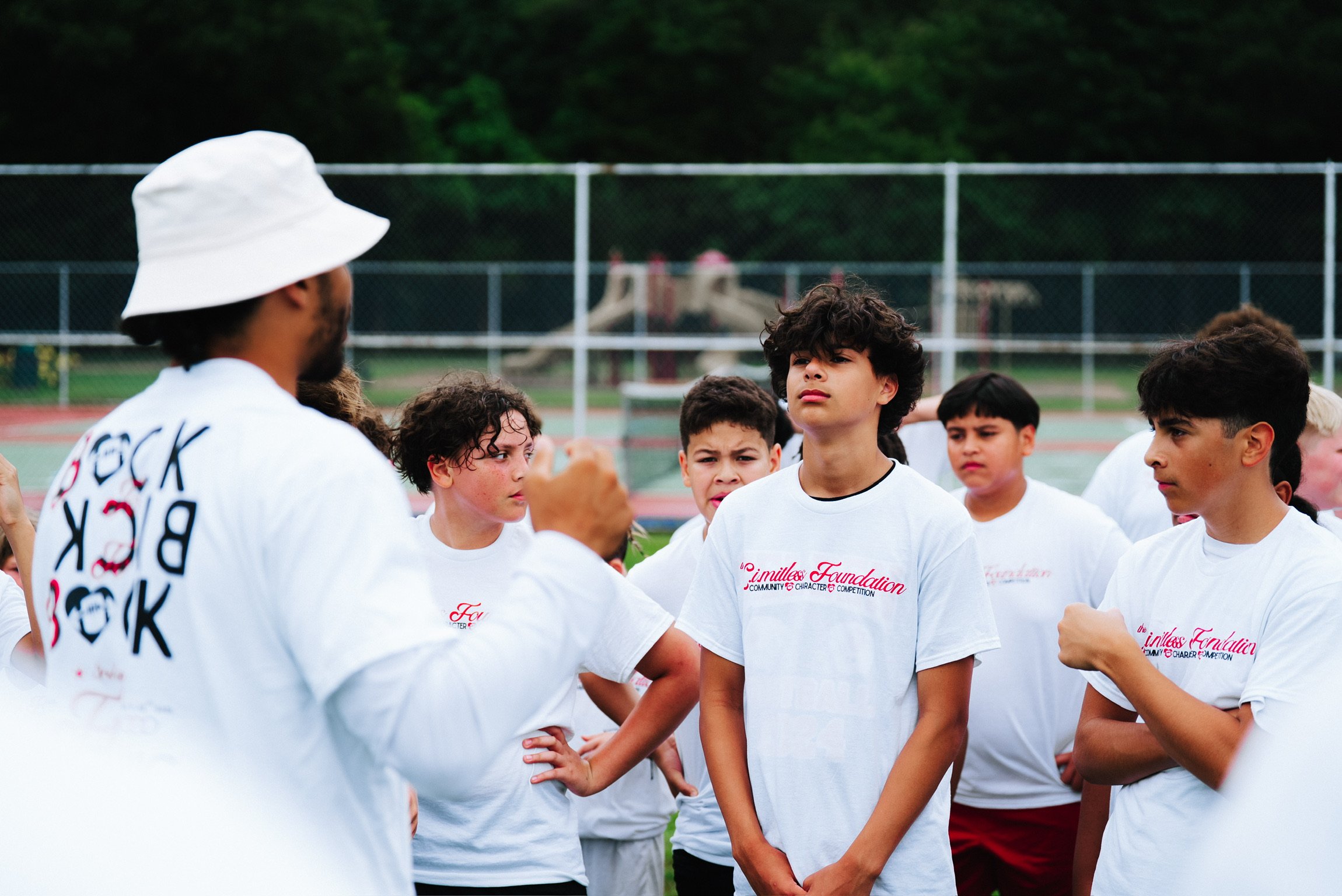
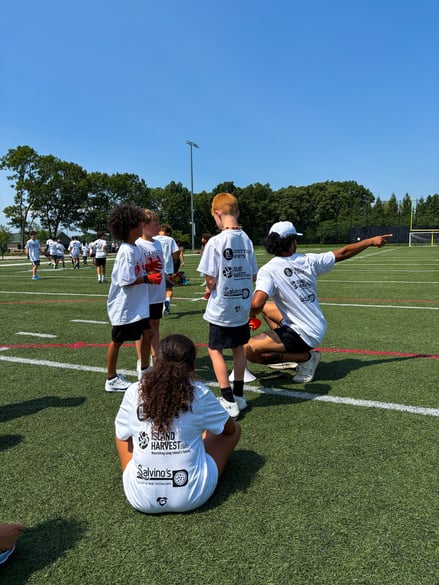
Through our Annual Summer Youth Clinic, L.I.MITLESS Youth Nation Flag Football Program, and volunteer-driven mentorship, we invest in the whole young person. Athletic training is the platform. The true outcome is the development of strong, confident, and purpose-driven individuals prepared for success in school, career, and community life.
Our programs are free or low-cost, removing financial barriers so that every young person has access to the coaching, mentorship, and fee assistance they need to grow.
In Conclusion: Why Community Sports Partnerships Are Essential for Youth Leadership
In communities where young people face real barriers to opportunity, sports-based leadership programs are not optional extras. They are essential. They offer structure, belonging, mentorship, and a clear pathway toward personal and academic success.
Community sports partnerships build more than athletes. They build leaders, mentors, and engaged community members who carry the lessons of the field into every chapter of their lives.
If you believe in building young leaders through support, opportunity, and purpose, we invite you to stand with The L.I.MITLESS Foundation. Whether through volunteering, partnership, or giving, your investment creates lasting impact for young people across Long Island and the Tri-State area.
FAQs About How Sports Partnerships Support Youth Leadership
What is a sports-based youth leadership program?
A sports-based youth leadership program uses athletic training as a vehicle for teaching life skills, character, and leadership. The L.I.MITLESS Foundation structures its programs around three pillars: Character, Community, and Competition, building young people who lead with integrity on and off the field.
How does mentorship in sports support academic success?
Mentorship in sports reinforces discipline, time management, and goal-setting. The L.I.MITLESS Foundation pairs young athletes with mentors who invest in their academic progress alongside athletic development, strengthening both school performance and personal growth.
Why are community partnerships important for youth sports?
Community partnerships surround young athletes with coaches, families, and organizations who share a commitment to their development. The L.I.MITLESS Foundation collaborates with schools and local nonprofits across Long Island to create supportive networks that extend far beyond game day.
What age groups do youth leadership sports programs serve?
Most youth leadership sports programs serve school-age athletes from elementary through high school. The L.I.MITLESS Foundation focuses on young people across Long Island, offering clinics, mentorship, and leadership development designed for a range of ages and skill levels.
How can parents get involved in their child's sports leadership development?
Parents can get involved by attending events, volunteering as mentors, and staying connected to their child's program goals. The L.I.MITLESS Foundation encourages family participation because it strengthens the community network that supports each young athlete's growth.